Section outline
-
-
Key insights from people who inject drugs, 2023-2025
Tracks Enhanced Surveillance System
Who we are:
A program that has been running for over 20 years at the Public Health Agency of Canada (PHAC)
What we do:
Conduct bio-behavioural surveys among key populations in Canada by working with provinces, territories, communities, and researchers
Our goal is to describe:
Rates of sexually transmitted and blood-borne infections (STBBI), behaviours, use of prevention services, care, and treatment for people who inject drugsMost recent survey (2023-2025)
Who participated
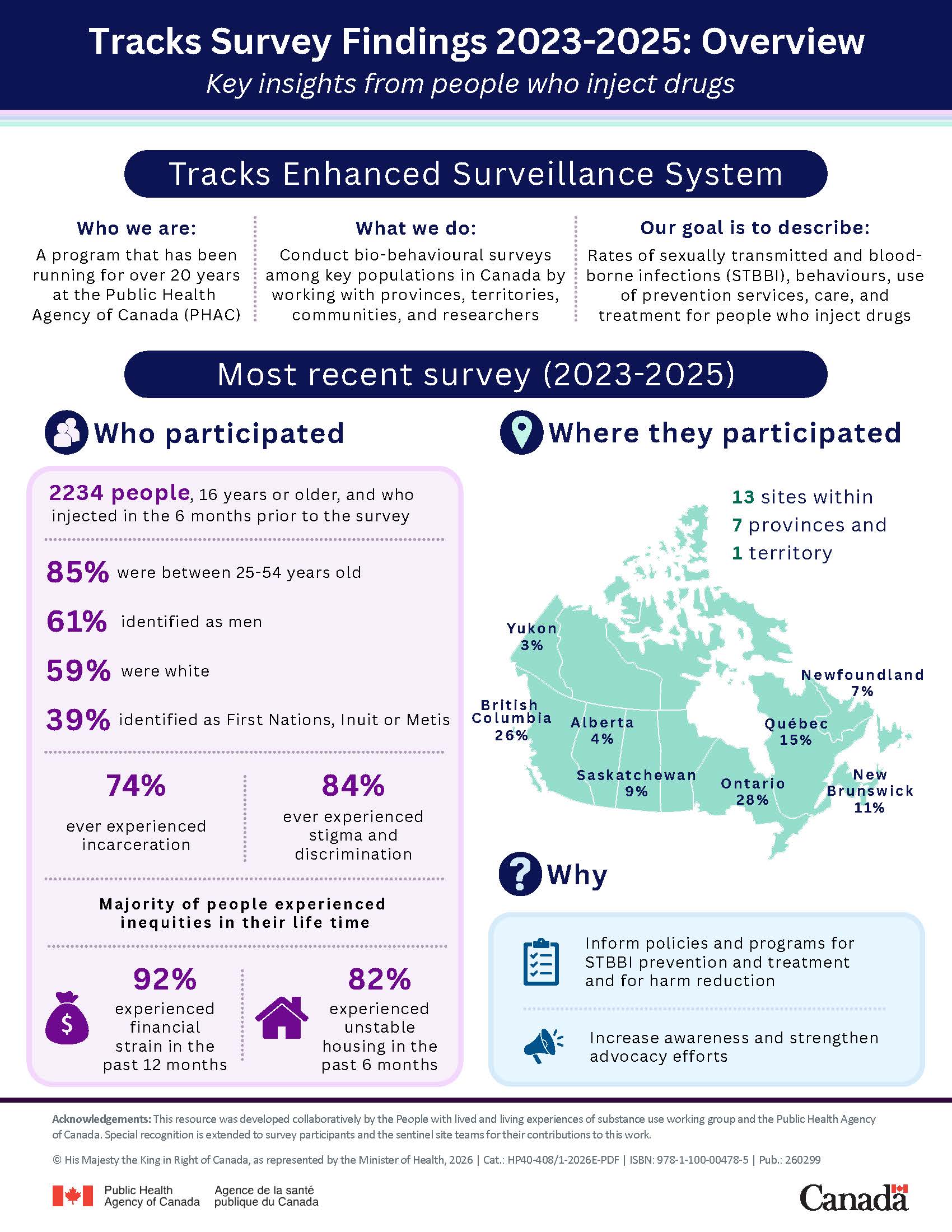
- 2234 people, 16 years or older, and who injected in the 6 months prior to the survey
- 85% were between 25-54 years old
- 61% identified as men
- 59% were white
- 39% identified as First Nations, Inuit or Metis
- 74% ever experienced incarceration
- 84% ever experienced stigma and discrimination
Majority of people experienced inequities in their life time
- 92% experienced financial strain in the past 12 months
- 82% experienced unstable housing in the past 6 months
Where they participated
- 13 sites within
- 7 provinces and
- 1 territory
Province/Territory Percentage of respondents British Columbia 26% Yukon 3% Alberta 4% Saskatchewan 9% Ontario 28% Québec 15% Newfoundland 7% New Brunswick 11% Why
- Inform policies and programs for STBBI prevention and treatment and for harm reduction
- Increase awareness and strengthen advocacy efforts
Acknowledgements: This resource was developed collaboratively by the People with lived and living experiences of substance use working group and the Public Health Agency of Canada. Special recognition is extended to survey participants and the sentinel site teams for their contributions to this work.
-